
Processes and integrations
Connect the steps and systems that still rely on manual work.
We define inputs, rules, exceptions, and owners to reduce duplicate work.
Tell us which process you want to improve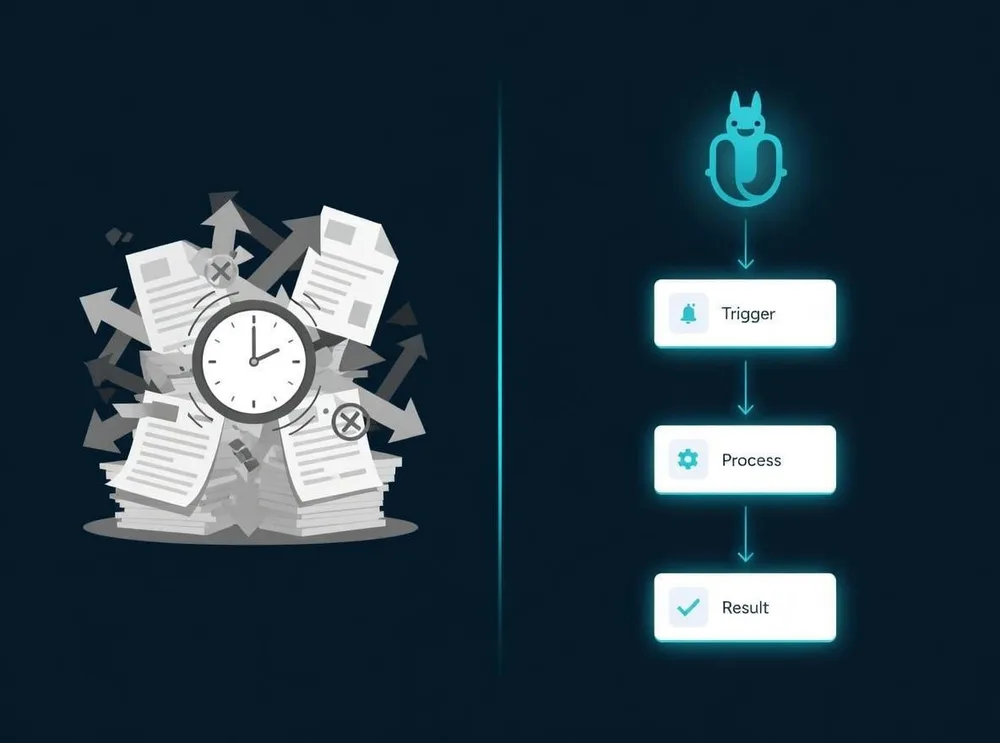
When it makes sense
Start with the problem you see today.
Automation is more than connecting tools. It means deciding what information enters the process, what happens in each exception, and when a person needs to review it.
- The same records are created or updated across systems.
- Approvals, alerts, or reminders are tracked manually.
- Documents circulate without a clear workflow.
- The same data is entered more than once in different tools.
How we approach it
A clear scope before adding complexity.
- 01
Map the workflow
We identify inputs, outputs, owners, and the points where work stops.
- 02
Connect what matters
We define which systems exchange information and under what conditions.
- 03
Agree on rules
We make exceptions and required controls visible.
- 04
Implement and review
We launch the process with clear criteria for intervention.
Something to consider
A workflow designed around exceptions
A request can arrive, be checked against rules, ask for review when information is missing, and keep a record of its status. The team retains visibility into the process and the points that need attention.
Questions to assess fit
Good decisions start with good questions.
What can be automated?
Processes whose inputs, rules, owners, and exceptions can be defined with the team.
Where does human review fit?
At the points that require a decision, an exception, or a confirmation that should stay with a person.
Keep exploring
Automation starts with the exceptionsLet’s talk
Tell us which process you want to improve.
Share the context you have. The first step is understanding what is happening and what deserves attention.
Tell us which process you want to improve